
多尺度差异化气候减缓路径
-

-
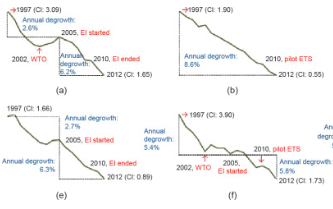
Performance Assessment and Outlook of China‘s Emission-Trading Scheme
China overtook the US as the world’s top emitter in 2007, and produced 1.5times the emissions of the US by 2013 [1] . At present, China’s emissions make up over a quarter of the global total. China is expected to produce three times the emissions of the US by 2030 [2] . Indeed, China’s role and efforts in CO 2 reductions matter greatly for the peaking of global emissions, even without further emission leakages to less-developed re...
-
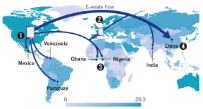
Take responsibility for electronic-waste disposal
International cooperation is needed to stop developed nations simply offloading defunct electronics on developing countries, argue Zhaohua Wang, Bin Zhang and Dabo Guan. ...
-
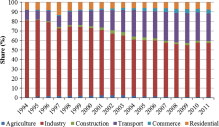
Using an extended LMDI model to explore techno-economic drivers of energy-related industrial CO2 emissi
Although investment and RD activities can exert significant effects on energy-related industrial CO2 emissions (EICE), related factors have not been fairly uncovered in the existing index decomposition studies. This paper extends the previous logarithmic mean Divisia index (LMDI) decomposition model by introducing three novel factors (RD intensity, investment intensity, and RD efficiency). The extended model not only considers the conve...
-
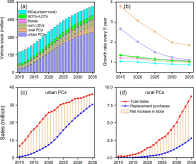
How will greenhouse gas emissions from motor vehicles be constrained in China around 2030?
Increasing emissions from road transportation endanger China’s objective to reduce national greenhouse gas (GHG) emissions. The unconstrained growth of vehicle GHG emissions are mainly caused by the insufficient improvement of energy efficiency (kilometers traveled per unit energy use) under current policies, which cannot offset the explosion of vehicle activity in China, especially the major southern provinces. More stringent polices ...
-
Targeted opportunities to address the climate–trade dilemma in China
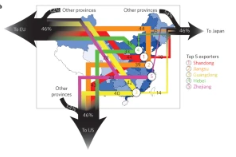
International trade has become the fastest growing driver of global carbon emissions, with large quantities of emissions embodied in exports from emerging economies. International trade with emerging economies poses a dilemma for climate and trade policy: to the extent emerging markets have comparative advantages in manufacturing, such trade is economically efficient and desirable. However, if carbon-intensive manufacturing in emerging ...
-
Climate policy: Steps to China's carbon peak
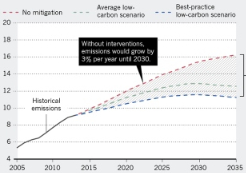
Regional targets and improved market mechanisms could enable the nation's carbon dioxide emissions to peak by 2030, say Zhu Liu and colleagues. ...
-
Determinants of stagnating carbon intensity in China
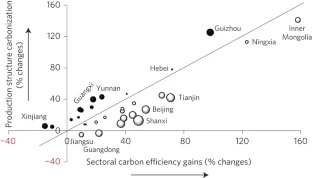
China committed itself to reduce the carbon intensity of its economy (the amount of CO2emitted per unit of GDP) by 40–45% during 2005–2020. Yet, between 2002 and 2009, China experienced a 3% increase in carbon intensity, though trends differed greatly among its 30 provinces. Decomposition analysis shows that sectoral efficiency gains in nearly all provinces were offset by movement towards a more carbon-intensive economic structure. ...
-
Energy Policy: A low-carbon roadmap for China
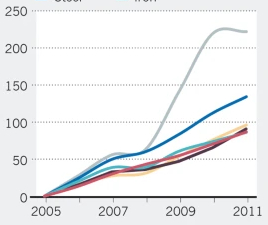
Recycling, renewables and a reinvigorated domestic energy market will allow China to lead the world in low-carbon development, say Zhu Liu and colleagues....
-
Inter-provincial clean development mechanism in China: A case study of the solar PV sector
With ever growing urgency, climate change mitigation is fast becoming a priority for China. A successful policy of implementing and expanding sustainable development and the use of renewable energy is therefore vital. As well as long-term and near-term targets for installed capacity of renewable energy, in its 12th five-year plan, China has created strict and ambitious carbon intensity targets for each province. This study proposes an in...